|
What our Lab does Research on:
Developmental Cognitive Neuroscience is an interdisciplinary field devoted to understanding how children’s minds change as they grow up, interrelations between that and how the brain is changing, and environmental and biological influences on that.
Our lab specializes in studying a region of the brain known as prefrontal cortex (PFC) and the cognitive abilities that depend on it called executive functions.
Executive functions include 'thinking outside the box' and flexibly adjusting to unexpected change (cognitive flexibility & creative problem-solving), reasoning and mentally playing with and relating ideas and facts (working memory), and giving considered responses rather than impulsive ones, resisting temptations, resisting distractions, and staying focused (self-control, discipline, & selective attention).
We study…
their development,
genetic influences on them,
environmental influences on them
& their neural bases
(neuroanatomical and
neurochemical).
To study their neural bases and modulation by genes and neurochemistry, we use functional neuroimaging (fMRI) & molecular genetic techniques.
To study their modulation by the environment, we look at detrimental factors such as poverty or stress, and we look at facilitative factors such as various interventions and school programs, and the possible benefits of dance, music, storytelling, and martial arts.
Prefrontal cortex, and thus executive functions, are the first to suffer and suffer the most if anyone is sad, stress, lonely, or not in good physical health. Thus, Prof. Diamond is an outspoken proponent that we have to care about people’s emotional, social, spiritual, and physical well-being, if we want them to be able to problem-solve, exercise self-control, or display any of the other executive functions.
We offer a markedly different perspective from traditional medical practice in hypothesizing that treating physical health, without also addressing social and emotional health, is less efficient or efficacious.
We also offer a markedly different perspective from mainstream education in hypothesizing that focusing exclusively on training cognitive skills is less efficient, and ultimately less successful, than also addressing emotional, social, spiritual, and physical needs.
Check out a new immersive, interactive
web platform
that explores executive functions through cartoons,
engaging tasks, and a comic strip featuring the neural regions underpinning executive functions,
created by, Saanvi Jassal, when she was an undergraduate at UBC.
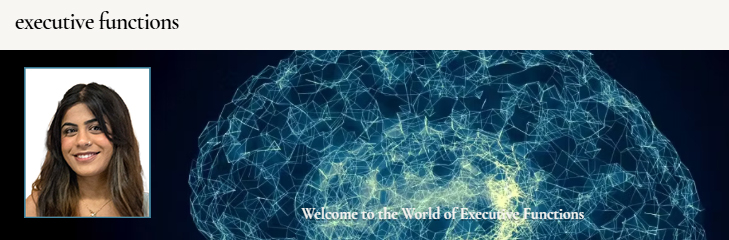
https://jassalsaanvi.wixsite.com/executivefunctions

Watch whiteboard animation
A short whiteboard animation illustrating a point often made by Prof. Diamond about how executive functions in early childhood can have long-lasting impacts because they can set in motion positive and negative feedback loops.
 American Public Media's American Public Media's
program
On Being
with host, Krista Tippett
Learning, Doing, Being:
A New Science of Education
"What neuroscientist Adele Diamond is learning about the brain is turning some of our most modern ideas about education on their heads. Her work is scientifically illustrating the educational power of things like play, sports, music, memorization and reflection. What nourishes the human spirit, the whole person, it turns out, also hones our minds.
My thinking about the education I received, about school testing, and about what I want for my children will never be the same after the conversation I had with neuroscientist Adele Diamond."
For Blog, click here
for info on the program, click here
to listen to a re-airing of the interview, click here
To listen to the kite story, click here
In 2023, we organized a large 4-day conference called ‘A Joyous Celebration of Ideas, the Arts, Science, and Efforts to Make the World a Better Place’ - a cross-cultural gathering that spanned the arts, humanities, sciences, and humanitarian and social justice initiatives, that built community across continents, cultures, and fields.
|
|
| |
 |
Some Research Highlights: |
 
Click Here |
|
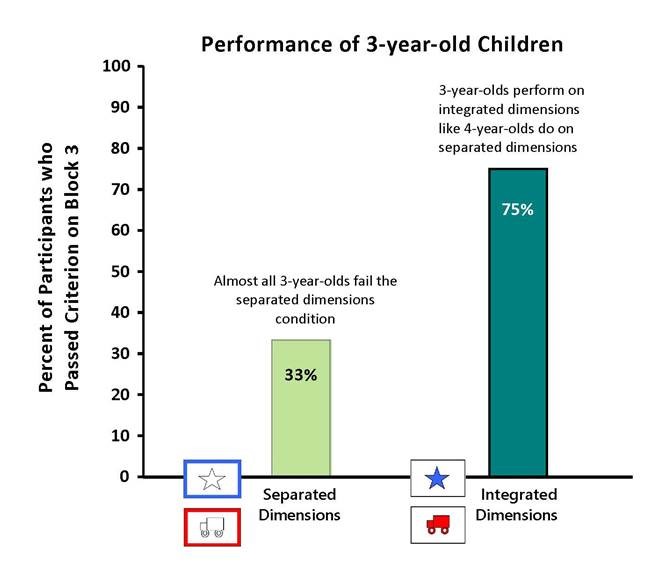
Children barely 3 years old CAN do conditional reasoning – 1-2 years earlier than anyone had previously thought possible. All that was needed was a superficial change to the stimuli: When color was a property of the shapes (line drawings of a star and truck) rather than of the background (as in all past conditional discrimination testing), 3-year-olds can succeed.
These findings suggest that scaffolding preschoolers' emerging conceptual skills by changing the way stimuli look (perceptual bootstrapping) can enable 3-year-olds to demonstrate reasoning abilities long thought beyond their grasp.
Ling, D. S., Wong, C. D., & Diamond, A. (2021). Children only 3 years old can succeed at conditional “if, then” reasoning much earlier than anyone had thought possible. Frontiers in Psychology, 11: 57189 (pdf)
This builds on our earlier work showing that very simple changes that parents or teachers could implement enable children to demonstrate understandings and abilities they had been thought not to possess: see the papers listed under Significant Contribution #8: click here
|
| |
|
|
 |
|
|
|
|
|

Click Here |
|
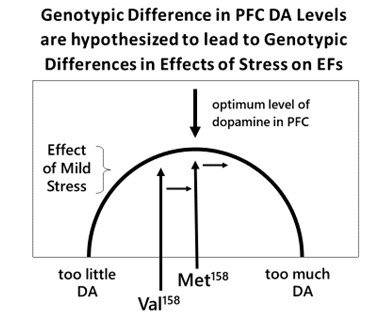
Is even mild stress ever really good thing? Even extremely mild social evaluative stress (worrying about what others might think of you or your performance) impairs the executive functions of most people. Excitement or exhilaration over being challenged is different from the anxiety of feeling stressed. Perhaps educators and employers should rethink whether intentionally imposing stress really improves performance.
see Significant Contribution #4: click here
Zareyan, S., Zhang, H., Wang, J., Song, W., Hampson, E., Abbott, D., & Diamond, A. (2021, forthcoming). First demonstration of double dissociation between COMT-Met158 and COMT-Val158 cognitive performance when stressed and when calmer. Cerebral Cortex, 31,1-16 (pdf)
This builds on our earlier work:
Diamond, A., Briand, L., Fossella, J., & Gehlbach, L. (2004). Genetic and neurochemical modulation of prefrontal cognitive functions in children. American Journal of Psychiatry, 161, 125-132 (pdf)
Diamond, A. (2007). Consequences of variations in genes that affect dopamine in prefrontal cortex. Cerebral Cortex 17, 161-170 (pdf)
|
| |
|
|
|
|
|

Click Here |
|
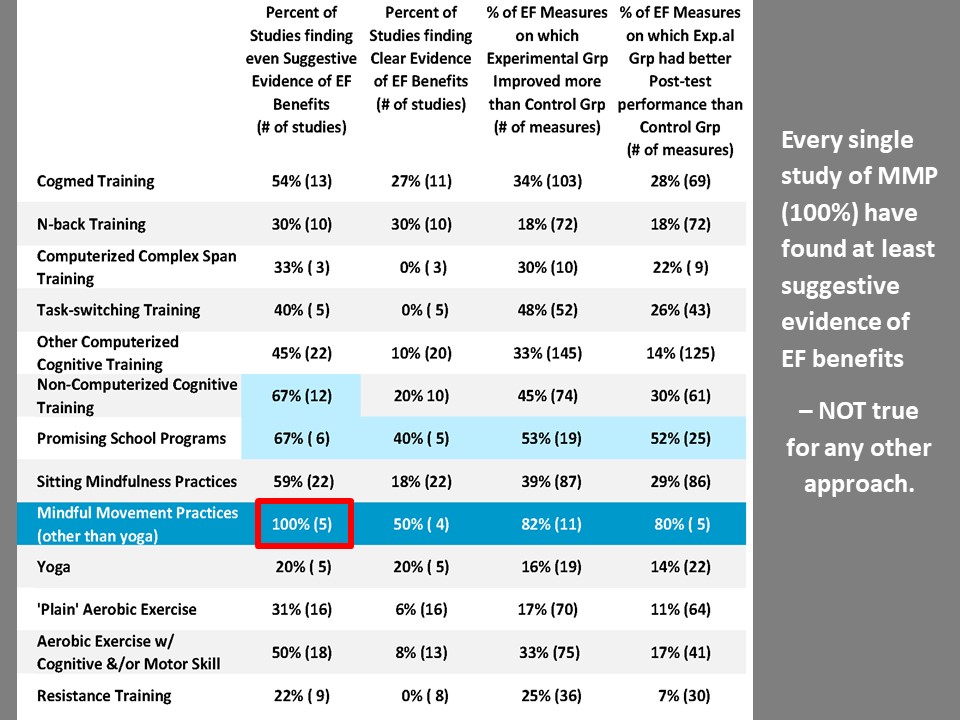
Our systematic mega-review of executive function interventions is the first to review all the different ways that people have tried to improve EFs (not just computerized training or aerobic activities) and at all ages (from young children to octogenarians). We found that mindful movement practices, e.g., taekwondo & t’ai chi, show the best results for improving EFs. Promising school programs are second. Both approaches show better results than any computerized cognitive training. Perhaps that’s because they involve more in-person trainer-trainee interaction than computerized training. Results for EF improvements were the worst for aerobic activities and resistance training probably because of how those interventions have been conducted, rather than that physical activity does not benefit EFs.
see Significant Contribution #9: click here
Diamond, A. & Ling, D. S. (2019). Review of the evidence on, and fundamental questions about, efforts to improve executive functions, including working memory. In J. Novick, M.F. Bunting, M.R. Dougherty & R. W. Engle (Eds.), Cognitive and working memory training: Perspectives from psychology, neuroscience, and human development, (pp.143-431). New York, NY: Oxford University Press. (pdf)
|
|
|
|

Click Here |
|
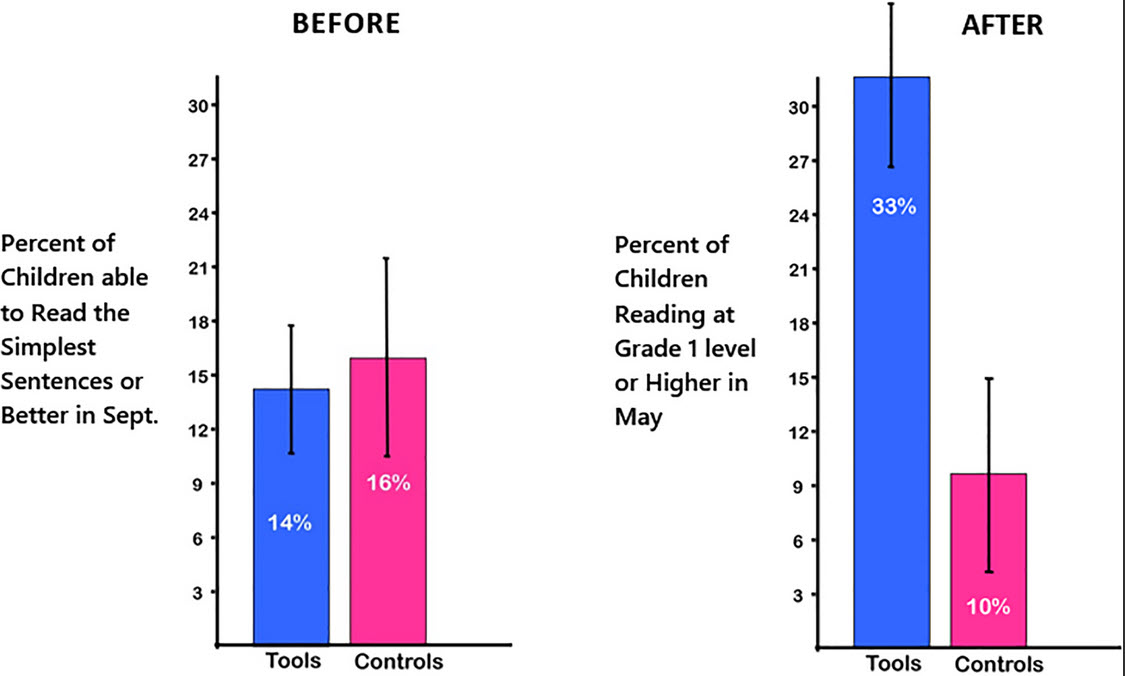
We conducted the first randomized controlled trial of the kindergarten program, Tools of the Mind, (Tools), in Canada. We found that Tools – which emphasizes play, improving self-regulation, working together and helping one another, and hands-on learning - improved academic outcomes and real-world executive functions, reduced bullying and peer ostracism, and increased students’ kindness and helping behavior as well as teachers’ enthusiasm for teaching. For example, by Spring Tools teachers were still enthusiastic about teaching; control teachers were exhausted. Tools also reduced initial disparities separating children, schools, and teachers.
see Significant Contribution #6: click here
Diamond, A., Lee, C., Senften, P., Lam, A., & Abbott, D. (2019). Randomized control trial of Tools of the Mind: Marked benefits to kindergarten children and their teachers. PLoS ONE, 14, 1-27 (pdf)
|
|
|
|

Click Here
|
|
We demonstrated that ADHD that is primarily inattentive is fundamentally different from ADHD of the hyperactive or combined type -- with different genetic and neural bases, cognitive profiles, responses to medication, and patterns of comorbidity.
This resonated deeply with patients and clinicians. The number of websites devoted to ADHD-inattentive rapidly rose from 4 to 1,000’s and treatment for ADHD-IA has correspondingly changed.
see Significant Contribution #3: click here |
| |
|
|
|
|
|
Click Here |
|
One line of our work has led to worldwide changes in the medical guidelines for the treatment of a genetic disorder (PKU) that improved many children’s lives.
see Significant Contribution #2: click here
see: www.apa.org/research/action/pku.aspx
Diamond, A. (2001). A model system for studying the role of dopamine in prefrontal cortex during early development in humans. In C. Nelson & M. Luciana (Eds.), Handbook of developmental cognitive neuroscience (pp. 433-472). Cambridge, MA: MIT Press. Reprinted (2002) in Reader in brain development and cognition. Blackwell Press (pdf)
Zagreda, L., Goodman, J., Druin, D.P., McDonald, D., & Diamond, A. (1999). Cognitive deficits in a genetic mouse model of the most common biochemical cause of human mental retardation. Journal of Neuroscience, 19,
6175-6182 (pdf)
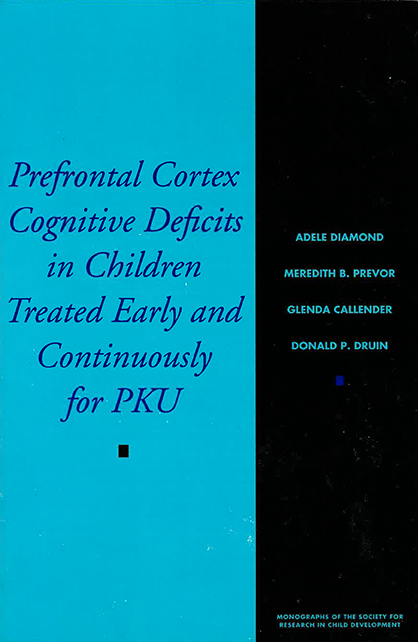
Diamond, A., Prevor, M.B., Callender, G., & Druin, D.P. (1997). Prefrontal cortex cognitive deficits in children treated early and continuously for PKU. Monographs of the Society for Research in Child Development (Monograph #252), 62 (4), 1-207 (pdf)
Diamond, A. & Herzberg, C. (1996). Impaired sensitivity to visual contrast in children treated early and continuously for PKU. Brain, 119, 523-538 (pdf)
Diamond, A., Ciaramitaro, V., Donner, E., Djali, S., & Robinson, M. (1994). An animal model of early-treated PKU. Journal of Neuroscience, 14, 3072-3082 (pdf)
|
| |
|
|
|
|
|

Click Here |
|
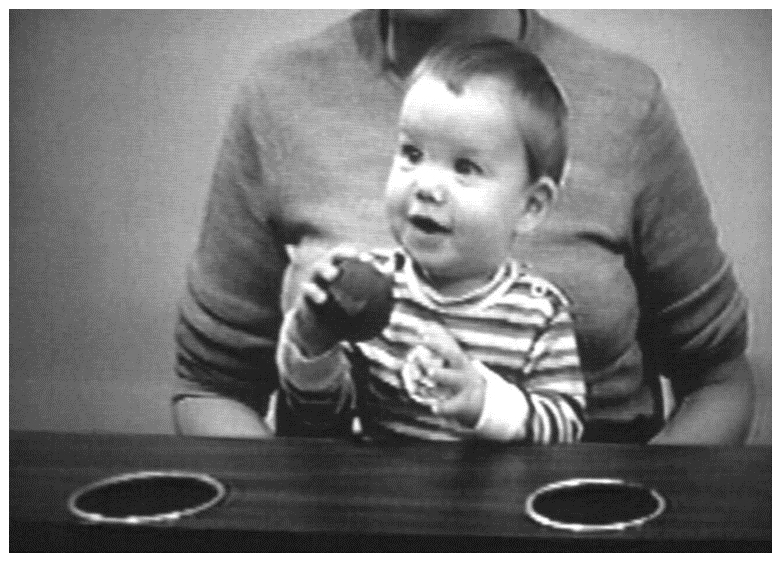
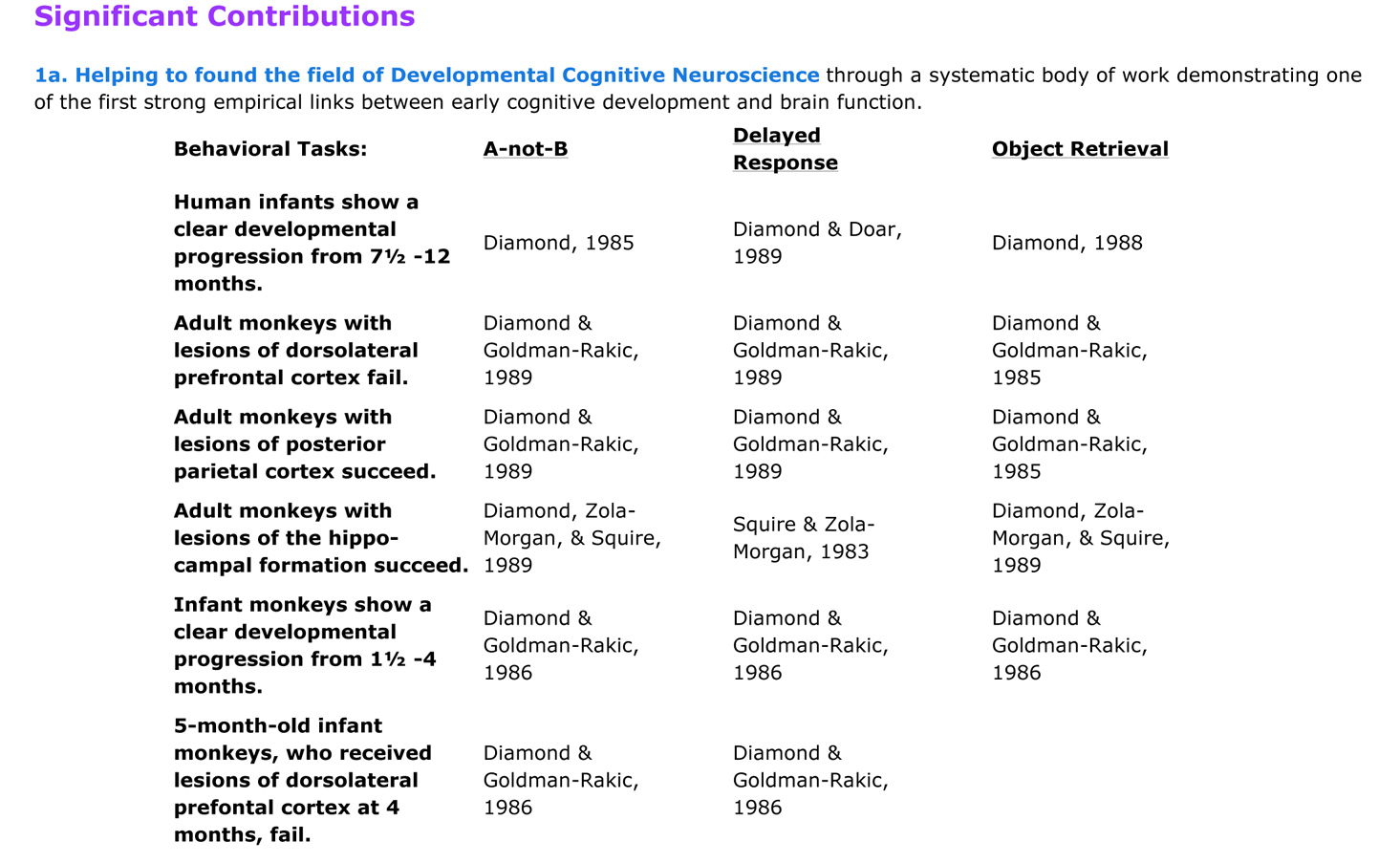
Our earlier work demonstrated one of the first strong empirical links between early cognitive development and brain function, and was instrumental in beginning the field of Developmental Cognitive Neuroscience.
see Significant Contribution #1: click here
see: http://www.devcogneuro.com/V2_images/table.jpg
Diamond, A. (1991). Neuropsychological insights into the meaning of object concept development. In S. Carey & R. Gelman (Eds.), The epigenesis of mind: Essays on biology and knowledge (pp. 67-110). Hillsdale, NJ: Lawrence Erlbaum Associates. ,br>
- Reprinted in M. H. Johnson (Ed.) (1993), Brain Development and Cognition: A Reader, Cambridge, MA: Basil Blackwell (pdf)
Diamond, A., Zola-Morgan, S., & Squire, L. R. (1989). Successful performance by monkeys with lesions of the hippocampal formation on A-not-B and object retrieval, two tasks that mark developmental changes in human infants.Behavioral Neuroscience, 103, 526-537 (pdf)
Diamond, A. & Goldman-Rakic, P. S. (1989). Comparison of human infants and rhesus monkeys on Piaget's A-not-B task: Evidence for dependence on dorsolateral prefrontal cortex. Experimental Brain Research, 74, 24-40 (pdf)
Diamond, A. & Doar, B. (1989). The performance of human infants on a measure of frontal cortex function, the delayed response task. Developmental Psychobiology, 22, 271-294 (pdf)
Diamond, A. (1988). Abilities and neural mechanisms underlying A-not-B performance. Child Development, 59, 523-527 (pdf)
Diamond, A. (1985). The development of the ability to use recall to guide action, as indicated by infants' performance on A-not-B. Child Development, 56, 868-883 (pdf)
|
| |
|
|
 |
The Brain Development and Learning Conference Series
Every 2-3 years, we organize a conference to help
 children by bringing research findings to parents, teachers, doctors, and others. Attendees LOVE it! children by bringing research findings to parents, teachers, doctors, and others. Attendees LOVE it!
click here for info
on the last conference
(July 24-28, 2013)
click here for info
on earlier conferences
in the series
|
|